
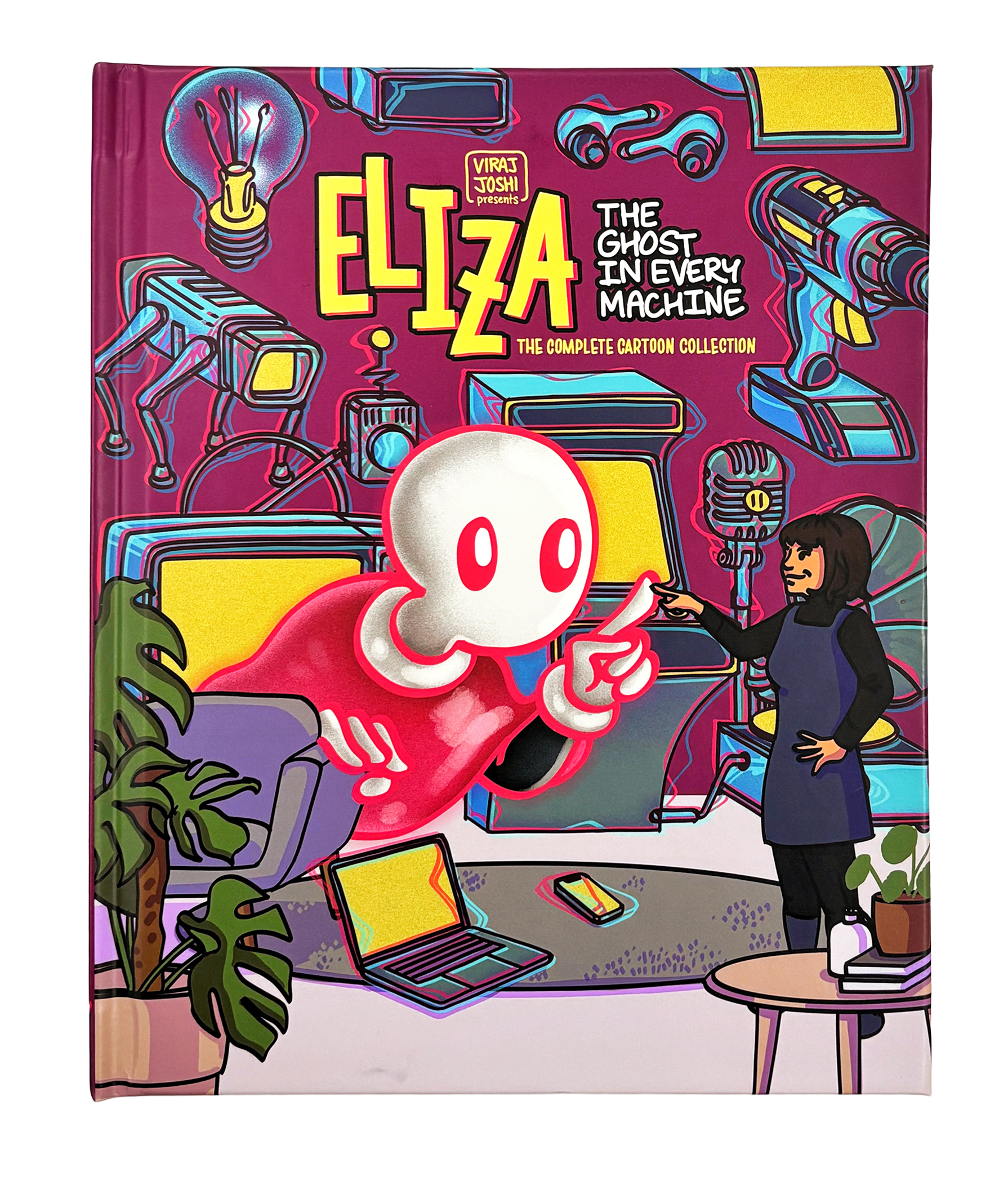
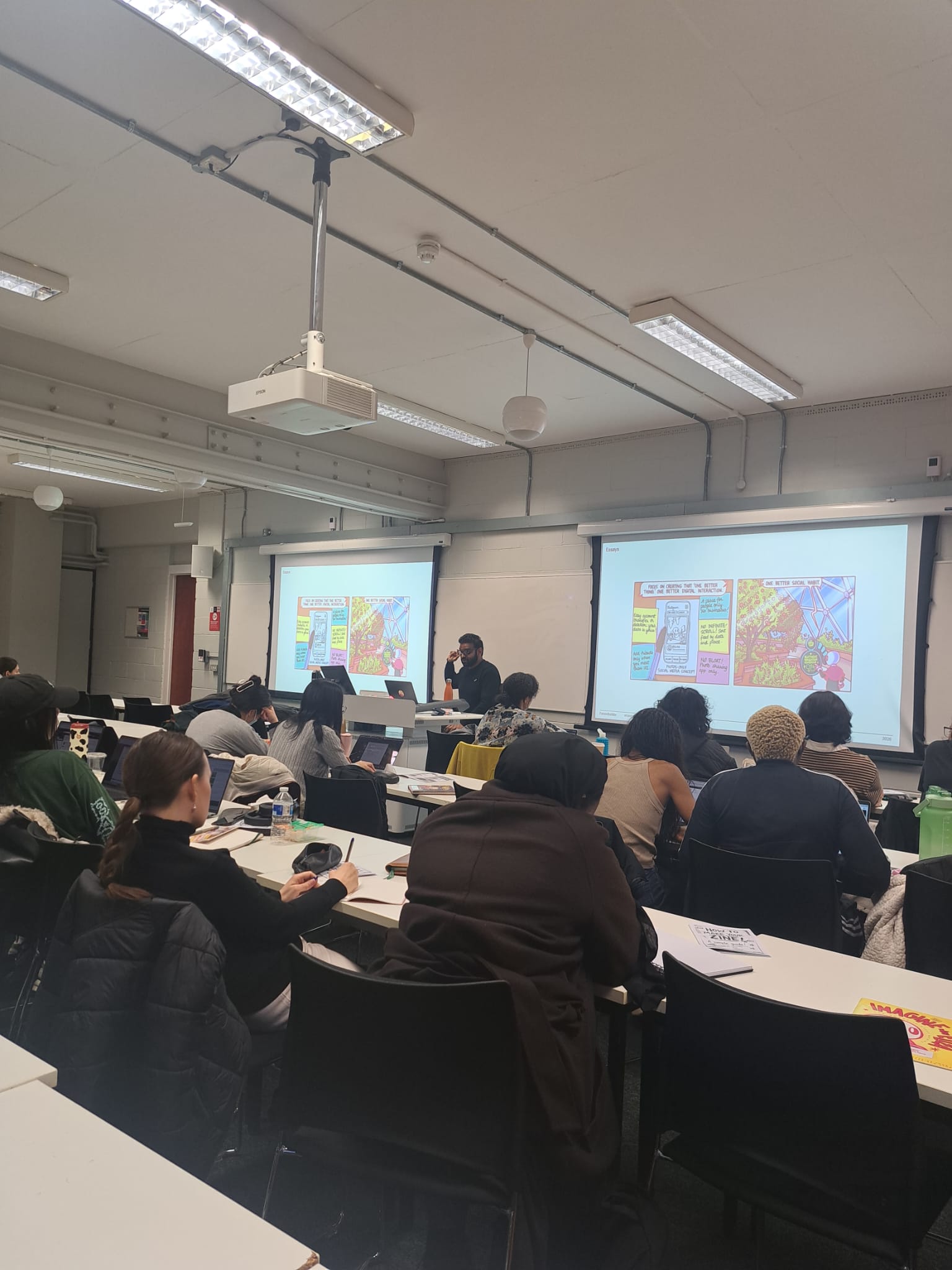
On Tuesday 24 March 2026, futures designer Viraj Joshi joined the Human-Computer Interaction Design MSc module I lead, INM317 Design Justice, for a guest session on speculative design and comics. Viraj is a Service and Interaction Designer and Design Futures Lead at Fjord, now Accenture Song, in London. He is also a visiting tutor at the Royal College of Art and Imperial College London, and the author of Eliza – The Ghost in Every Machine.
His visit followed Francisco de la Mora’s lecture the previous week, allowing students to encounter different but complementary approaches to working with comics in research and practice. These activities form part of my ongoing efforts to more fully integrate comics as a user-centred design method, and as an engaging and effective way to communicate research.
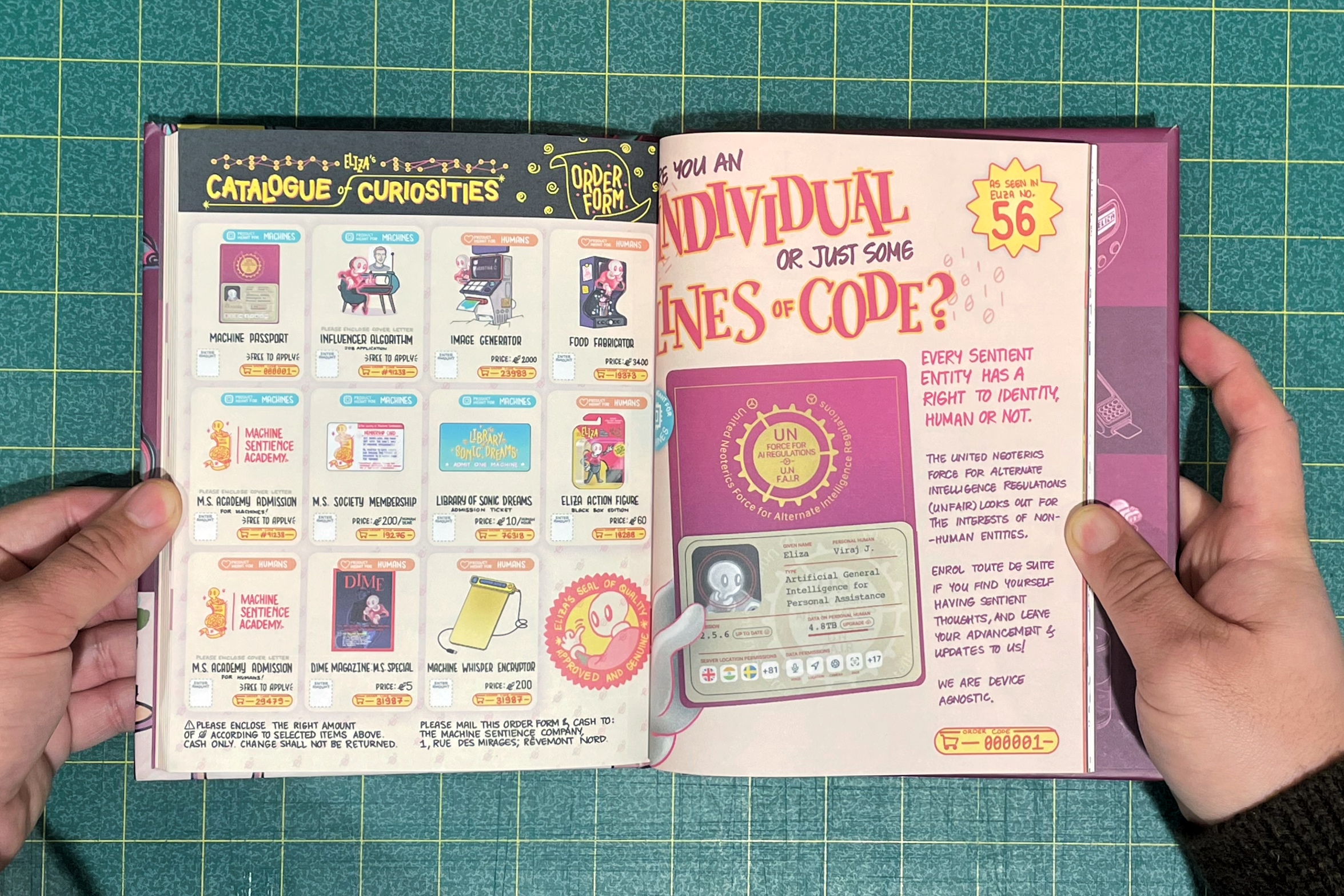
Viraj spoke about his professional experience as a designer and futures practitioner, focusing on his ongoing comics project, Eliza. Developed across multiple formats, including digital outputs, graphic novels and mini comics, the project explores the relationships between humans and machines through humour, narrative and carefully crafted visual worlds.
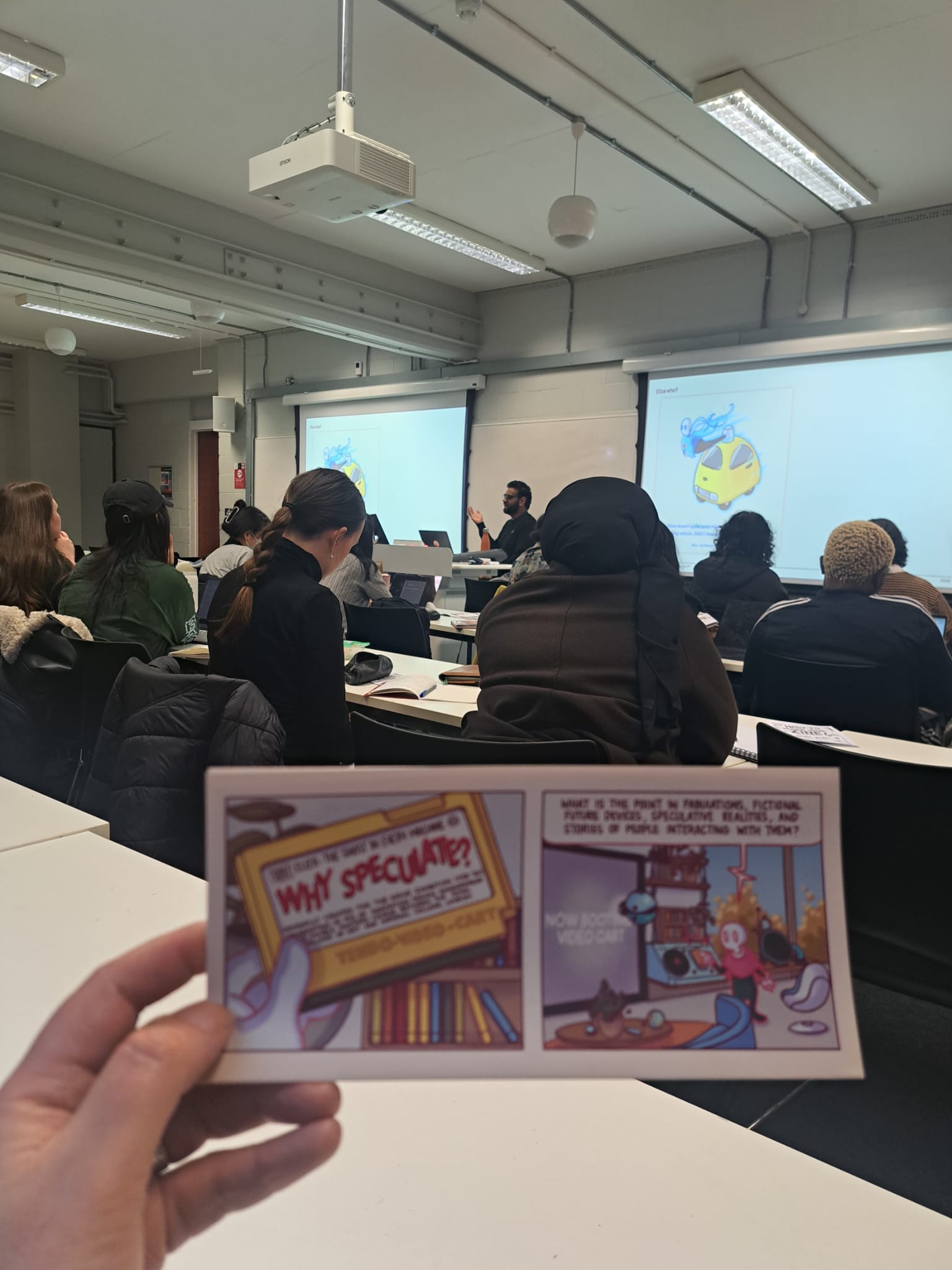
Through his work, Viraj demonstrated how comics can function as a speculative design method. Rather than documenting existing experiences, his practice imagines possible futures in order to surface questions about technologies, systems and their sociotechnical implications. Themes such as machine consciousness, coexistence with more intelligent digital systems and the normalisation of emerging technologies are approached in ways that are both accessible and thought-provoking. At the same time, Eliza offers alternatives to techno-pessimistic narratives by foregrounding more hopeful and imaginative possibilities .
The session contributed to ongoing module objectives around developing awareness of zine formats and creative methods for research and communication, particularly within the context of Design Justice case studies. Students once again engaged actively throughout, asking thoughtful questions and offering feedback, making it a valuable learning opportunity for all present, complementing their developing understanding of comics as both research method and design practice.
I remain very grateful as this was another generous, inspiring and motivating session, offering a valuable first-hand professional perspective on how speculative design and comics can be combined to explore and communicate complex ideas, and to imagine more just futures.

 Everything is Connected
You must be logged in to post a comment.