I thought I’d share publicly here a message for my students I posted this term. I have edited it to remove internal links to libraries etc. Maybe someone else will find it interesting.
Dear all,
I just wanted to take a moment to send a message of solidarity, empathy, and understanding. I know these are stressful times—not just with coursework, assessments, and learning, but also with everything happening in the world. On top of that, our module asks us to engage with complex, theoretical, political, and deeply personal ideas. It’s challenging work, but it matters—and, believe me, it will be rewarding in the long run.
Now, here comes a long, unsolicited post—apologies in advance!
I understand that every new email, post, or recommendation can feel like just another addition to the overwhelming amount of information we’re already navigating. For better or worse, these are the channels we have to connect, and information is the currency we exchange and information sharing can be a means to express care for each other.
As I’ve mentioned throughout the module, we’re fortunate to be in a field that both nurtures and is nurtured by so many different areas of practice. In difficult times, it’s important to seek out things that bring joy, spark creativity, and stimulate new ways of thinking. Inspiration and motivation can be incredibly empowering.
Sometimes, what inspires us comes from unexpected places—outside our immediate field or coursework. Even if something doesn’t seem directly “useful” for our assignments, presentations, or exams, if it helps us think differently, it’s valuable in its own way. A book I’ve returned to often over the past two years is 140 artists’ ideas for planet Earth, edited by Hans Ulrich Obrist and Kostas Stasinopoulos (Penguin Books, 2022).
It’s the kind of book you can dip in and out of whenever you need, full of creative responses to global challenges—some funny, some serious, some puzzling. It’s not available yet in our library (though you can suggest they get it), but I found a copy at Islington’s Central Library. It may also be available in other University of London libraries. Or, if you can, consider buying it—it costs about the same as two pints of beer or three cups of coffee! (Not a paid ad, I promise.)
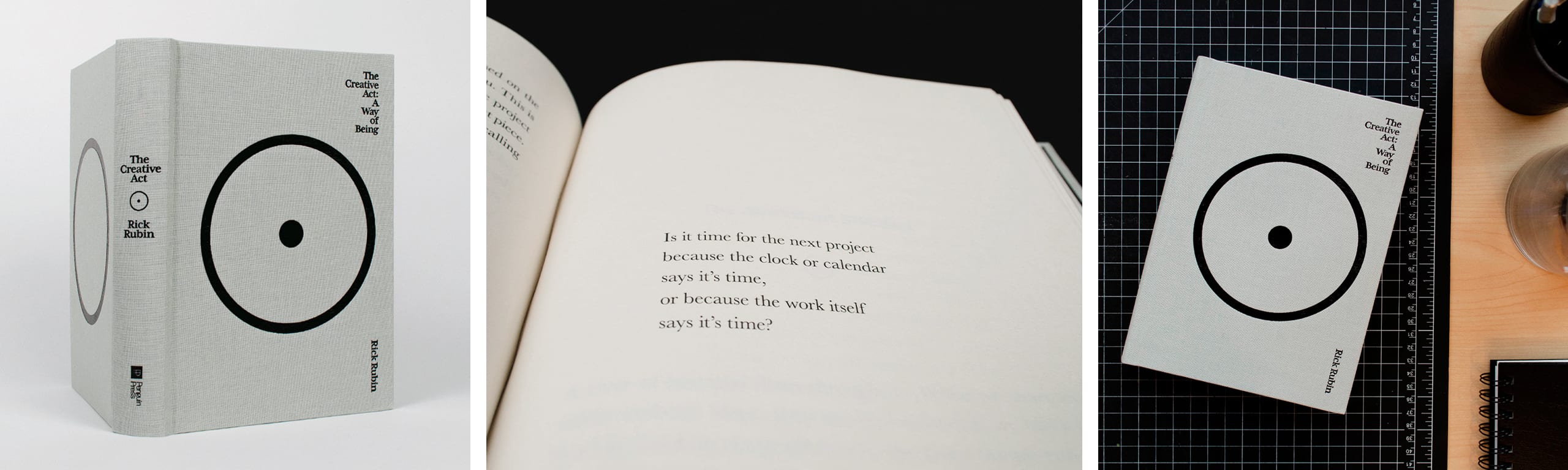
Another book I find inspiring is Rick Rubin’s The Creative Act: A Way of Being (Canongate, 2023). There’s also an audiobook version read by Rubin himself. Again, it’s also not in our library yet (I’ve requested it), but other public or university libraries may have it. (Remember inter-library loan exists).
When we’re busy and under pressure, finding time to read for pleasure or inspiration can feel like a luxury. That’s why short books (like the two I showed you in class yesterday)1 —or ones you can dip into as needed, like the ones I recommend in this message—are such a great way to keep ideas flowing. I’m sure many of you have books that have inspired your research or design practice—feel free to share them with your colleagues when the opportunity arises.
Anyway, this turned into a long message! If you’ve read this far, thank you. I hope you find the recommendations helpful and, more importantly, that you continue to find motivation, excitement, and joy—even when things feel tough.
Wishing you all the best,
Ernesto
- These books were Greta Thunberg’s No One Is Too Small to Make a Difference (2019) and Chimamanda Ngozi Adichie’s We Should All Be Feminists (2014). ↩︎

 Everything is Connected
You must be logged in to post a comment.